On Speaking Out loud about Things that Matter

We have to be able to talk about things that matter. It is the only way to create a secure and fair future. There are many ways and areas in which this is needed, but my blog today is about political matters.

We have to demand our elected officials are people of moral integrity and have the fortitude and curiosity to consider all opinions, even ones different from their own.

Leaders are supposed to be our inspiration to make the world a better place. We should ask them to Be the Change we want to see.

The world I want to see does not include bullying, meanness and heckling. Getting things done is not accomplished in that manner unless there is a fire or war and the fighters need to listen – pronto.

While it might seem like it, at the moment there is no emergency and there is no place for using degradation and meanness to get things done.

Tuesday evening, I attended to a banned book club on the Handmaid’s Tale. For anyone unfamiliar with the story, it’s a novel based on a mix of completely true historical events cobbled together into something that based on the past and the mindset that “it could never happen here”, could very likely happen just about anywhere.

Anywhere being the good ol’ United States of America in the fictional state of Gilead.

At the end of the book there is a short chapter taking place in the far future where historians reference the book as the first period of Gilead. In this future chapter, the reference of the first period assumes there are many other periods of time following before Gilead fell. What seems frightening is that I could almost see a future in which historians are studying the rise and fall of the United States which at just over 200 years old was taken over by extremists, beginning the first period of a reign of something none of us could have foreseen.

Think about it.

How can such a thing happen in a place where “it could never happen here”?

Perhaps it is because people become afraid to talk or do anything about anything that they perceive as potentially uncomfortable.

Are we not already at a place where this is the case?

What does this have to do with our leaders?

The italicized below is from an exchange between my brother Mario & I yesterday morning. 

BEFORE you have an opinion about it, can you consider the topic as it relates to civility? The point is about RESPECT. Yes, the writer said negative things about someone you may or may not like, the grammar of my writing or his might not  be perfect, but if you miss the message about being civil you are missing the focus and crux of the blurb and this blog.

As I was writing the start of this blog yesterday, Mario texted more. I’ll paste it at the end because I think it wraps up the point I am trying to make nicely.

I didn’t want to post this because it could seem polarized. It could seem like I am a liberal and that might automatically put me in a box where I want to tear down statues and defund the police. Instead of doing that, it would be easier for me to post a photo of my dog and talk about my wonderful life.

While I am focusing on my lovely life (whether or not it’s actually lovely at the moment) and being afraid to voice my opinion and the wrath of what people think about what they think my opinion is, more people will be rallying (most quietly) and thanking Marjorie Taylor Green for having the courage to heckle what they perceive as a moron. That is not the world and change I want to see.

Similar to what the world must have been like before Gilead in the Handmaid’s Tale, it is far easier to go on with our everyday lives, remain neutral and be fearful that if you voice an opinion that you will be boxed into a category of ‘sides’ and get into an argument where two viewpoints are attempting to convince the other party of the right way to do things instead of listening respectfully and considering opinions different from their own.

A 2021 Gallop shows a record number of Americans who identify as independent. Myself included. A record number of people remaining quietly neutral.

I think we are remaining neutral because it seems both sides have moved to extreme views that we do not agree with. However, as we are remaining neutral, those sides are still “duking it out” and becoming more powerful in ways the majority of us do not agree with. While they are behaving like we are in combat and not like a democracy with a constitution that requires we consider both sides; either side could “win” and change the shape of our future completely.

I’m not sure how to stop this except to rally together with others to shame meanness, hatred and inability to behave decently in our day-to-day lives and in our elected officials.

We need to demand that our leaders do their jobs by being an example of morality, kindness and having the ability to listen to a viewpoint different than their own without shaming and demoralizing the other side.

While remaining neutral and not talking about things that matter seems safe right now, history has showed this has lead to consequences I am certain we do not want. It can change by making it the norm to have discussions about uncomfortable things.

The New York Times in America Has a Free Speech Problem  wrote the following:

Being afraid and sticking to your side is very human and natural. But we need to demand more of our leaders. They need to be able to inspire us to step out of our comfort zones, not retreat into them.

While we are mindlessly watching kitten videos and the Handmaid’s Tale on Hulu thinking we are safe and free in our nation, it’s very possible that the mindless head in the sand attitude is how one of the extremist sides will take over and our ancestors will wonder how the heck we let it happen….

It starts with the small things. Every person should consider the following when they are about to speak:

  • Is it true?
  • Is it kind?
  • Is it necessary?

Why don’t we rally together and Cancel Meanness?

Why don’t we call out and shame someone who is being disrespectful?

Why don’t we stop being afraid of what other people think and engage in open discussions about things that matter with the intent to learn something you might not have considered before?

The words and signs BE KIND don’t say enough, but it says it all.

Life on Life’s Terms. 3 Years of Recovery

Today. Friday. A day off for me. New Moon. 3 years to the date marking my Sobriety Anniversary.

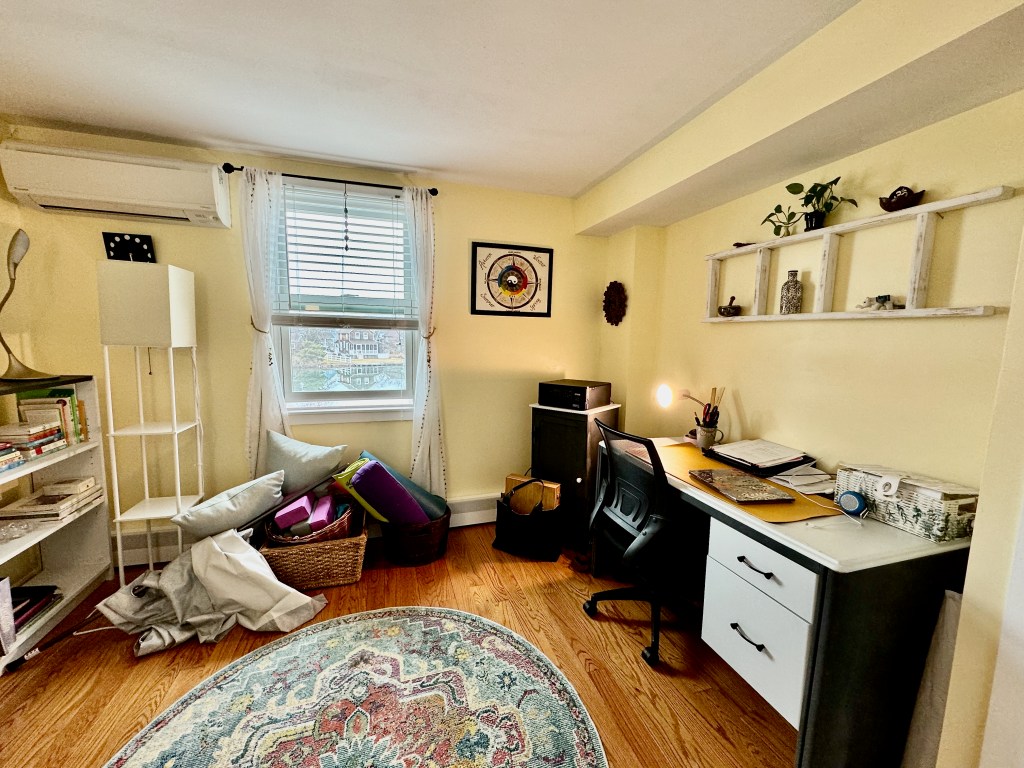
I sit in the flexible office/yoga/art room. It’s the space within our home that is mine alone.

I sit in butterfly pose on my mediation cushion. I play a yogic playlist that I used to teach with and hadn’t heard in at least 4 years. It is familiar yet new at the same time.

The lovely backdrop of construction noise and banging takes place outside my door and below me on the floor.

In front of me is a pile of stuff that will be used “sometime soon”. Sometime soon started last June when our construction project began.

My husband pops by on a quick work break to say hello on the way to the bathroom. He looks in my office/yoga/art room and tells me the scene is “So You”.

Yes. This is me. Right now in this moment in time. Living life on life’s terms. Construction, piles of things, and me trying in the midst of it all to stay centered and be me.

3 years ago was a different story. I went to bed at 4am after being in the Emergency Room for not being able to come off a panic attack. I hyperventilated for hours. I had to appear in court in the morning for an arrest so I must have slept 2 hours at most. As I lay in the ER in the hallway (because naturally there is no space on a random February Monday evening) I couldn’t believe the low I had gotten myself into.

I didn’t know where to go, who to reach out to. What the next step was.

It was then I surrendered. In the hall of Yale New Haven’s Emergency Department. I took the first step that AA’s 12 Steps Teaches and surrendered. I lost control. I had no control to start with. Alcohol had control over me. I accepted that.

Every day when I sat down to drink the first perfectly chilled glass of chardonnay, I would turn on my soap opera. Commercials were still part of the app I watched it on at the time, and there was a recurring ad for a program called Aware Recovery. Every day I would think that I should probably call them. There was no time better than the moment to look into this. I put in a request for information on my smartphone right there in the hall in the middle of the night.

Aware Recovery called me back the next morning while I was in court waiting to be seen. I remember telling the person on the phone where I was. I was expecting shock and disgust but what the person told me is that they’d been in my exact position and they can help. I cried with relief when hearing that. Relief for not being judged. Relief for knowing there is help and knowing that someone in my position was able to come back from something like this.

The next few days and weeks were a blur. Aware Recovery stepped up. At the time I didn’t know I would need to rely on a community to help me get through recovery or who if anyone I had already known would be a part of what I didn’t even know I needed, but it works out if you surrender. It is done one step at a time. Metaphorically. Literally. Step one was to surrender. The moment I did that for real, really real – the rest started to fall into place. You have to want it and to surrender. It’s the easiest/hardest part.

One still needs to work. The community can’t do it for you.

I can write and list all the lessons I learned, thank all the people who did a part either willingly or unknowingly to help, talk about the metaphors, the work, the yoga, my own journey – but I’ve done that many times.

Today I’m just thankful for where I am and can attest to anyone who isn’t sure they should, can or want to quit drinking – that they can really do it. Life is better without it. If you think you need it, it helps you, it tastes good – some might be true, but there are healthier ways without the risk of becoming addicted to get the benefits you seek.

I’m still me, only better.

This was me before – this is me now. I’m just not inebriated, angry, silly, prone to being triggered, or prone to risky behavior – drunk texting, flirting, driving…. It’s just me without the risks, calories, costs, and cravings.

I love to knit. Particularly to knit big chunky cozy blankets.

I love plants and gardening.

I love yoga and meditation.

I love reading, particularly spiritual books.

I love living by the water and all things nautical.

I love painting, drawing and creating art.

Life on life’s terms. It’s an AA term I love. It’s not just people in recovery this applies to. It’s an awesome way to accept life.

I’ve been living through a construction project. My house has been noisy and dusty and at times I felt like I have been losing my mind. The past 3 years taught me many lessons like this in different ways.

This is life. We can either accept it and feel free or fight it and feel like a prisoner on someone else’s terms. Life isn’t going to stop being hard because you stop drinking. But you will be able to accept life as it shows up without pain.

This is my life and I accept it.

Everyone’s life is different, full of what they love and cherish and contain stuff, people, circumstances that they really wish wasn’t there.

Who ever said life would be anything other than good, bad and everything in between?

This is my life. You have yours and maybe your story or someone you love’s story involve(d/s) addictive substances too. There is a community of us who have recovered from addition and want to help anyone who wants help in the ways they know how to.

This is one way I know how – reaching out, sharing, sending love and being available.

Namaste.

On Why I Clean Everyday

First – why do you care? Haha, but really… If you care at all, why do you? How does it affect you?

When I was 22 years old I moved to Cape Cod. I was entering the Active USCG Reserves while transitioning from a military member to a military spouse. My new home was located on a military base. It was not my first home as an adult, but it was the first home I set up alone.

This period was a transitional time in my life. Before then I went straight from high school into the military. I was married just over a year later and unexpectedly pregnant 6 months after that. My life was busy and I had not truly actively planned anything in my life until that point. As I looked around at all the boxes and pictures to hang, the disorder around me was affecting my mind. Or was it the disorder in my mind affecting my outer world?

I quickly went to work setting up home. While I opened boxes, and organized the outward disarray, the disorder in my mind started to unravel into digestible thoughts. How do I gather all the college credits I accumulated into applying for a degree? Do I quit smoking? Have another baby? What do I want to be when I grow up?

As I unpacked and moved items, then moved items again into better places I made notes – call the education office, look into the local college, schedule that physical, reach out to neighbors, ask about pediatricians, talk to spouse about a new baby while this little guy was still young so he had a playmate…

The act of outwardly organizing was helpful. I was making progress on something important, but also the monotony combined with the active thinking of where we would most easily grab a plate was just enough active/inactive brain power to keep my mind focused on thinking about the next phase of my life.

When the house was all set up and arranged just so, I missed the act of taking care of it. So I cleaned it really well. Again, the repetition and combination of active/inactive thought was helpful in  organizing my inner thoughts. As they were all I had while doing this type of work.

I learned then I very much enjoyed cleaning. All these years later I would label what I was doing as a sort of meditation. But at the time it only felt like cleaning. I started to clean everyday in various ways. There was everyday picking up (dishes, laundry, diapers, trash, wipe the table…) but also things that needed to happen often but not daily – wash floors, launder sheets, clean bathroom. I put the nondaily essentials into a schedule for myself the way I learned in my years of cooking and ended up doing meal planning and shopping… basically transferring my work skills to my home. Then I moved these things to the outside – fix fence, mow lawn, ask about the grass seeds that are supposedly free…

I met my neighbors. They were all lovely. The one who was the friendliest lived across the street and worked on the base as a cleaner for the military houses in between family transitions. I don’t remember her name but I will call her Melanie. I asked Melanie what she did when she cleaned these empty houses and she told me all about the floors and the blinds and the walls and corners, and all the checkboxes she had to complete. Surprisingly her house was quite a mess and she didn’t really enjoy cleaning. But she did comment that she saw me cleaning often.

What ???

Saw me cleaning? How?

Through your window Melanie replied…

Through my window I thought?

Now I was embarrassed. But intrigued by what she told me. I hadn’t thought about cleaning blinds or paying attention to ceiling or floor corners.

A day or two later I decided to tackle the blinds. As I was doing so Melanie waved to me from insider her home across the street. I was slightly embarrassed yet again but continued to clean the blinds as if it were a normal everyday occurrence.

The next time I saw Melanie she commented on my cleaning again. Melanie commenting on my cleaning became the standard. It embarrassed me so I often would wait until I didn’t see her mini-van in the carport to clean anywhere near my own windows or outside.

None-the-less from there I continued a lifelong habit of cleaning nearly daily and scheduling various cleaning tasks for various days of the week.

Through the years I’ve had to explain and defend my cleaning to my partners, neighbors, kids, step-kids, friends who comment with some kind of annoyance that my house is clean. I was always trying to hide it, clarify where I saw dirt or oils, negotiate with the kids to just vacuum that room – yes on this vacuum setting. It was exhausting. I loved to clean when no one was home so I didn’t have to explain it.

Which brings me to the point of this blog. Why did anyone care that I was cleaning in the first place? I didn’t really ask for help. The kids chores of table setting, dish washing, cleaning their own bathrooms on a schedule or scraping the cat litter of the cats they wanted were not chores of some Nazi clean loving freak. The cleanliness of other people’s homes doesn’t affect how much I enjoy visiting their home or their company in any way. I’m not judging those who don’t like to clean. I know I’m unusual in this particular way.

Which brings me to a bigger question. Why does anyone really care what other people do? How they take care of their home, how often they cut their lawn, their hair, their fingernails? How deep into my life do you care about what I do? Why does my lawn count and my fingernails not so much?

At what point does what I do affect truly affect anyone else? Or does what I am doing make others reflect on what they are doing? And is that really my problem? Should I be hiding my true nature in worrying about how others will look at me or themselves?  I did hide my real self for a long time worrying about what other people thought. That was not healthy.

This question grows from me into the larger scale. Why does anyone care who anyone loves or how they use their body to please a lover? How does the spices one uses in their cooking matter to you? Why does it matter how other cultures cook, pray, love, dress, and take care of one another?

Yes – there are things that affect other people in some ways. But not as many as you think. Maybe the one house on the block with the overgrown lawn can bring down the property value of the street. There are things you can have influence over – like talking to that homeowner and maybe even offering to cut their lawn because it’s a single parent short on time. But perhaps do back down and accept how things are if that person doesn’t reply the way you’d like. You cannot control other people and just because you don’t like something they do or don’t do, it doesn’t make them wrong or crazy. Why waste any mental energy on something you cannot control?

I’m not saying it’s easy to do this, I’m just offering the suggestion to ask yourself why you might care and why you are wasting your mental energy on something you can’t control. There is a locus of what you can control, influence and what you have no control over.

I clean all the time. I like it. It clears my mind. For me the house doesn’t need to be very dirty to clean it (most folks shower daily even when they aren’t that dirty). It is something in this crazy world that I feel I have control over. I like the way I feel after moving around and taking care of the animate and inanimate objects that I own like my bed, plants and pets. I like the way those objects like being taken care of by me. I like the way my surroundings look. The question I asked myself when I was 22 about the disorder of my environment affecting my mind or if it was the other way around is irrelevant to me today. Both matter and this is one of my methods to tackle both.

But why do I need to even explain that?

So I ask again and again and again… why does it matter?

You have control over the thoughts about why this or anything matters. Are you wasting your energy on something you want to waste it on? Do you have control over it? Influence? Neither?

I’m going to clean whether anyone likes it or not. I hope you collect your gnomes or pink socks or do whatever it is that you like as well as long as no one is getting hurt. Don’t worry if I like it, I love you for being you and doing what you love.

Make sure you are doing no harm and then do what you love without shame or question or worry.

Be the change you want to see. Be what you wish the world to be.

It’s all you can do.

On the Teacher and Communication 

This story (two paragraphs down) has come up for me in various ways during past few weeks. I’ve been referencing it in thought and in conversations. I feel the story is rich with many lessons, particularly the meat of the story on emotions. One lesson I continue to ponder and adjust my own behavior on is clarity in communication.

This week alone there were at least five occasions at work and three at home where I was listening intently to another person and either during the communication or shortly thereafter realized that there was more than one way to interpret what was being said. Yesterday I interrupted an ongoing written chat to suggest that it’s difficult to get what is inside one person’s head into another’s and asked if we could verbally communicate. Since I read and discussed this story, I have been picking up the phone and turning on my camera far more often than before to make sure that I am on the same page as the other individual(s) I am working with. 

This reading opened my eyes to how often there is a disconnect between what is said and what is understood. I just haven’t noticed this before. It is particularly apparent when the communication is in writing.

I would like to convey that reading something like this on my own is different than hearing it read. Moreover, the more I read it; the richer it becomes. And when it’s discussed with other people I get perspectives I would have never come to on my own. 

Well DUH…

This is often the case for me too in a local library writing group I attend and a banned book club that I often participate in.

My favorite recent example of this “Duh” is after reading this passage about the teacher, a member of the group brought up the author’s use of the words “well-meaning teacher”. A poignant question was asked –Would the story have been interpreted differently had those 3 words not been there?

Good question! And my own answer is yes- absolutely. 

In one the many recent times I brought this story up and related it to a topic that was being discussed, the idea of being a third-party observer came to mind. The third party (reader) could discern that the teacher’s well-meaning intention does change the nature of the story. But that cannot necessarily be seen if you are a character in the story. 

I would like to say that in the past I looked at all perspectives and intents neutrally; but that wouldn’t be an honest assessment if I am honest with myself.

I know I always intended to do this. I know often I tried to put myself in the other person’s shoes. I know sometimes (more rarely) I did try to imagine I was writing a position paper and imagined how one could argue both sides. But those were for touchy issues. In my everyday life while communicating I assumed I understood and was being understood. Something about this story of the teachers flipped that assumption for me. 

Recently I have been looking at all communication with the assumption that I probably don’t understand and I’m probably not being understood. 

In the end what does this all mean? Well, that we need to pay attention more to what we are saying and how we are listening.

Soooooo….. at this point I could imagine one saying 

That sounds complicated Esterina, I don’t have time or patience to think about everything I am about to say or think about what you mean!

… and I can’t really disagree. What I am describing takes mental work and a little time that I didn’t apportion to it before. 

But the more I think about it, the more important I realize this is necessary and worth the effort. It’s an investment into saving time, building trust, and fostering peace. 

This next part might sound divergent from the topic, but it’s not particularly.

Over this last summer I did something I have been meaning to do for years. I changed my political affiliation to “unaffiliated”. I came to the realization that I don’t think the left and the right are that different in thoughts. Neither want school shootings to go on, unwanted pregnancies and subsequent babies, or to be hated because of what they look like or who they love. Small snippets, barbs and banners like “baby killer” or “2nd amendment” do not do justice to the complex topics and the varying ways they can be resolved that the majority of people who don’t reside on far left/right spectrums could find a solution to. We are all so distracted by extremes and categorizing, and are so busy and sure of ourselves that we aren’t taking the time to think anything through.

Aligning and dividing is the quick solution. These divisions are based on assumptions of what you think the other party’s intention is.

What I am describing is a human and natural response. But it doesn’t make it morally right. And it certainly doesn’t foster peace. 

Not many people are listening with the intent to hear. We were not really taught anywhere how to listen. 

It is mental work to consider the ways in which your words might have different meanings to someone listening. 

It’s even more difficult to consider a point of view you don’t like. Or be open to changing your mind. Or to stay put and engaged when a topic makes you uneasy. 

But I will argue that it’s wrong to run away, ignore, retort back without thinking through how your words could be interpreted and it’s certainly not helpful to not consider the filters and paradigms you operate in.

How could you not want to do this work and then wonder why we don’t have world peace? 

This short story about the teacher goes deeper for me, in that we frequently get so caught up in what we think are other’s intentions and agendas, we often miss the opportunity to have a rich discussion about the topic at hand.  

What was not discussed in my group or even here in the blog was the whole intention of this poor fictional teacher’s message about how emotions come and go like weather. What an awesome and very true analogy! And the irony of how the very message about emotions was neglected because of you guessed it- emotions…. 

I could go on… I could always go on, but I will stop and end with one more note to possibly consider.

It’s a new year. I gave up on New Year’s Resolutions a while ago. But I will never give up on wanting to be a better human and leaving the space I took up in the world better than I found it. If you don’t want to make New Year’s Resolutions but want to consider something to work on, perhaps contemplate how you might remove yourself from the stories you find yourself in and imagine being the reader of that story who is able to see and reflect on the full picture. And perhaps think about that monk’s message too, the one that got lost in all this the next time you sense a storm…

Happy New Year

On Your Hometown

I read a lot. When I veg out alone with the TV, I often watch documentaries. I don’t really know how I find these things (Amazon, Netflix, Kindle, etc have me pegged as a certain type I guess); but what I do know is that there are common themes. Mostly ones that would apply to a middle-aged woman.

One of the common themes is a main character who left their hometown after high school graduation and never looked back. In my books/shows that person is usually drawn back for some innocuous reason like a wedding or funeral, and  then find themselves entangled in stories, immersed in the past, and unraveling a mystery in which they are the hero or heroine of the story.

In the end they come back to their town.

I watch with intrigue but never imagined ever wanting to go back to my hometown. For the record I still don’t, but for the first time in my life this last weekend – I was intrigued by visiting and putting my toe in what always seemed like a waste of time to dabble in.

Like the characters in my stories there is an element of a painful past I’d rather escape. But in the mix are really, amazing happy memories too.

I’ve struggled with that.

It’s only in the past few years as I’m inching up to the age of 50 that I can see the value in looking upon the past as just what it was. It doesn’t have to be all bad in my mind as my brain probably made it out to be in order to cope and not get sucked back it. It’s a healthy reaction to trauma.

But truth be told, I had far more good times than bad. And it’s only now that I feel healthy enough to look at it all without negative emotion clouding all the good memories.

I lived in Brooklyn until I was 12, but those 6 real formulative years where you transition from child to adult I spent in Long Island in a small town often nicknamed “Mistake Beach”.

For good or bad, it is a large part of what made me who I am. There is nothing wrong with embracing what is and loving it all as part of life.

I have  been thinking about my hometown all week and today put together a little video.

I truly feel like I am in a place that I love every good and bad place I’ve ever been, any good or bad thing that ever happened to me or that I did. Because it all brought me to here where self-inquiry and self-reflection have a meaningful place with 47 years of experience to draw upon to be a better and healthier person for the second half of my life.

I’m grateful for all of it. Today in particular I’m grateful for Mastic Beach – my Hometown. No more hiding from the past.

On Making your Bed

I am told a good life starts in the morning with making your bed. 

Do you make your bed? 

I’ve heard all reasons of why folks do or don’t make their bed. It is a personal decision. But research shows that people who make their bed are more successful, productive and happier. 

I make my bed. I feel energetically better when I do. The room appears neater and I don’t feel schlepy when I crawl back in it at night. 

I have also heard people say “why bother?”, it’s only going to get messy again. 

There is truth to that. But your body will also get dirty after you shower. Most of us don’t skip showers for that reason. 

A lot of people tell me they don’t do yoga or meditate because they aren’t flexible or their minds don’t work that way or they aren’t flexible enough. A funny line in the yoga world is: 

“Saying you don’t do yoga because you aren’t flexible is like saying you are too dirty to take a shower”.

Taking it a step closer would be to say that you are too out of shape to exercise.

I hate to break it to you – we are all the same. Our bodies and minds need maintenance and when we don’t maintain them we have a monkey mind and we get out of shape. It’s really that simple. Yes there are exceptions but almost all of them can be overcome. 

We can skip cleaning our spaces and making our beds (or weeding our gardens- literally and metaphorically)- but while we are at it, why not skip that shower too? And why bother to exercise? Won’t we become atrophic again when we stop?

To live is to maintain. To live well is to maintain everything about our lives. Our health, our habits, our homes, our finances, our pets… and even our minds. They can all go to pot if we skip the maintenance and loose sight of their health. 

Yes- this takes up a lot of the day, but it’s worth the clean and cleared space because what you see around you directly affects what you feel inside you. You can feel it in your energy if you quiet your mind and get in touch with it. 

So make your bed and see if anything changes around you. 

Namaste 

“If you want to change the world, start off by making your bed. This is perhaps the most famous line from Making your bed to perfection each morning is a reminder that if you do the little things right, it makes the big things possible.”

Admiral McRaven

https://www.sec.gov/news/speech/miller-translate-military-lessons-entrepreneurship#:~:text=If%20you%20want%20to%20change,makes%20the%20big%20things%20possible.

On Minors and Gender Issues

I’m not a bigot in any way. I feel alive and love when people are who they are inherently. I can tell when they are being something other than themselves and it bothers me because it feels inauthentic.

I am ecstatic to live in a period of time where you can love anyone who you connect with openly and free. Maybe we aren’t completely there yet, but we are way closer than we have ever been in history. And we continue to progress everyday.

In this time period there is also a controversy over medical care and human rights. Particularly gender dysphoria. This part I don’t understand. 

Regardless of any health issue that arises, we should always try the least invasive solutions before diving into something unknown or irreversible. It’s not only the right thing for our bodies, it’s socially responsible for the cost of healthcare. 

To be clear I am not opposed to any kind of lifestyle and/or partner of any possible combination. 

And if there is no other solution one tries for being comfortable in your skin other than modifying your body with surgery or medicine, then I support whatever it takes to ensure that we are comfortable expressing ourselves as who we are.

To be clear however, I am opposed to this as a first solution or any solution for minors. Particularly for minors. 


I just don’t get what the controversy is about on gender altering for minors. 

Why can’t we buy cigarettes until the age of 21? 

We’ve made this restriction because we believe says we aren’t wise enough to make the decision to do something potentially harmful to our bodies. We KNOW it’s harmful and a risk. My mom died of lung cancer at the age of 49 from smoking. It’s bad for us. But there are people who live well into their 90s smoking everyday and don’t pass from smoking issues. It’s a risk. 

Same with 21 as the age limit for alcohol and in states where it’s legal – Marijuana. Risks.  Being old enough to decide to take the risk. Alcoholism runs in my family. I myself need to stay dry because it affects me in very negative ways. 

What about car and vacation home rentals? Many have age limits of 25. No one is arguing with these. Young people in general are a risk for so many reasons. Too many to list. Most of the time it has to do with making decisions that as you get older you wouldn’t otherwise take.

Why can’t we vote until the age of 18? Or even get a tattoo? Or enlist in the military? Because our brains are not yet developed and we aren’t yet wise or experienced enough to think things through or make major decisions.

These age limits are universal. As you get older you can rationalize more clearly, understand your emotions and make better decisions than a 16 year old may.

We have a legal obligation to our children until the age of 18. An obligation to protect them, not just cater to their wishes. We don’t cater to them because they are not old enough to know their own minds yet. We should absolutely support and let them try out things they would like to explore. But I would draw the line at permanent body changes. Using the line “but I know my child” is not possible because if the child isn’t old enough by every law to even vote, they can’t know their own mind- so how could a parent?  

Related, but unrelated…. Weight loss surgery. Pediatric weight loss surgery is not common. It happens but it is uncommon. There are strict prerequisites for it. Those prerequisites are family support/community in place, the requirement that all other medically supervised diets and exercises have failed over the course of 6 months to a year, and mental health pre-op. Plus – the adolescent has to have a BMI of 40 or more. 

Even grown adults have these guidelines. 

So I have to ask why is it controversial to put an age limit on gender altering drugs and surgeries? 

These children cannot even vote, let alone buy a cigarette. We all agree they are not old enough to make decisions good for them or society, so why is it so controversial that they wait until at least the age of 18?

Why are we scared that adult rights are being taken away when we put parameters in place to limit gender altering drugs/surgeries on adults too? Parameters like medically supervised alternatives first and the requirement for emotional support and counseling, before and after? How different is it from bariatric surgery? 

I think these are important considerations and that law makers are being responsible with our healthcare dollars by putting these laws in place. Children are not able to vote or buy mind altering substances for a reason. So why are we even having the discussion about body altering? 

I’m not a bigot. I am just asking. We need to be able to ask questions without being seen as a bigot. 

Enlighten me so I can help support positive societal change too.

On the One who is Looking

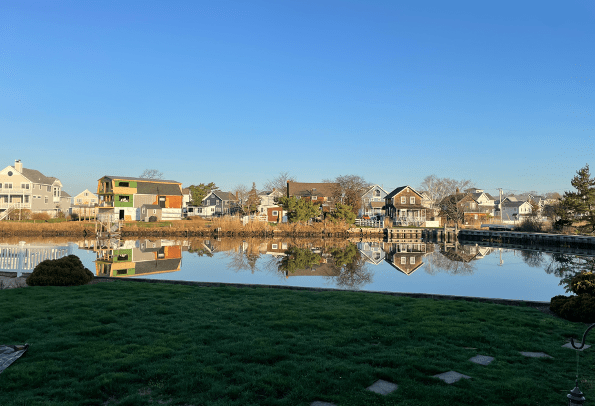
This morning was a gorgeous, unseasonal April spring morning. There wasn’t a wisp of wind, and the water surrounding my home was perfectly still. I took these two photos. What I love about these pictures is the perfect reflection of the objects on the water.

The photo with the wooden boat stakes is particularly interesting in that it is nearly impossible to tell where the stake ends and the water begins.

This situation reminded me very much of our essence and our soul. Do we know where we begin and forever ends?

That may sounds deep, but it really is not.

This stillness of the water this morning reminded me of the quote “As above, So below”.

What does that mean?

My understanding is that the laws of physics and how things work in the universe (above) is how things work with us too (below).  

Both Us and the universe are made up of the same “stuff”.

Our bodies and minds operate the same way the universe operates. Yes – even our mind. While our mind is invisible to the eye, is still a product of the “stuff” in our universe.

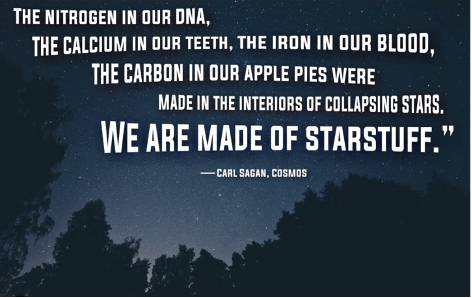
As Carl Sagan often said “We are made of Star Stuff”.

The Yoga Sutras were written around 200BCE in Sanskrit. In the very first chapter it is explained that we really are not separate from the Universe/God/The Divine/Pure Consciousness (or whatever your concept is of an entity that is greater than us as individuals). It is said that we can’t see this because we are looking at ourselves through false lenses.

Why did they think this?

It sounds complicated but when it’s explained and thought through, it’s really simple!

  • Our minds are comprised of matter
  • This matter fluctuates
  • These fluctuations are what we perceive as mind chatter (that voice in our head that is talking to us all the time, replaying songs and conversations, worrying, chatting-chatting & CHATTING…)
  • These fluctuations and chatter impact our emotions
  • If we quiet the mind, we will be able to think clearly and not have our emotions impacted by our  thoughts
  • A quiet mind brings peace
  • Our emotional/mind connection functions like a mirror that is clouded. Others have interpreted the original Sanskrit to liken this to water.

That last bullet point is the most important and off the bat it makes the least sense. But if you stay with me maybe it will make sense to you too.

But what needs to be explained first is the watcher part.

Watcher Part???

I am blown away by the idea, expressed in the first part of the Yoga Sutras, that we are one with everything in the universe. We are all connected to just one thing. A source of sorts. All major religions incorporate this concept into their teachings.

That part, in and of itself, is not particularly mind blowing. I have always heard it; kind of accepted it, didn’t understand it, and just moved along.

But when I considered this in a different way, I was able to understand the absolute coolness (for lack of a better word) of how this can be.

This is the watcher part:

If we consider the monkey chatter of our mind and understand it to be the organ of our brain doing it’s thing –

Then the other part– the part of us that notices the chatter (which seems like the same part)  – is the part of us that is not stuff. If you are just reading this through right now to finish and didn’t grasp the lines here; re-read it.

Another way to put this is that when I notice a song in my head that I didn’t put there, the thing that noticed the song is not the same thing that is playing the song. They can’t be. How can the same thing notice something it didn’t do.

The first time I grasped this concept someone asked me to close my eyes and picture a dog. When they asked if I saw the dog, I said yes. Then they asked who created that image and I answered my mind. Then they asked if your mind created the dog image, who is seeing the dog? And who told the mind to put it there?

The part that notices is the part that sages, philosophers and religion describe as our immortal soul.

Psychoanalysts have use the Freudian construction of the Id, Ego and Superego. While the Supergo in Freud’s theory is sort not meant to be a soul, it is still the watcher. It is the part that hears the chatter of the mind and sees the images that are there.

This Superego has also been referred to as the Superconscious.

If our soul/superconscious is immortal and interpreting the world through our senses; which part is real?

Back to that last bullet point  which I will copy here again:

Our emotional/mind connection functions like a mirror that is clouded. Others have interpreted the original Sanskrit to liken this to water.

If water is moving, filled with dirt, impacted by wind – anything that would disturb it; it is not clear. Items reflected off of it will be distorted and not be reflected back as they really are.

Same with a mirror. If you look through it and it is distorted, moving, dirty, or clouded it is difficult to see the original image clearly.

The mind works the same. When it is filled with chatter, static, noise, etc – it does not see clearly.

When we still the mind we will feel peace.

That is fairly simple right? Easy concept but difficult to carry out.

But where does this reflection come in?

The One you are looking for is the One who is looking

If our immortal soul is watching the world and listening to our brain’s chatter through our bodies, unless we clear the mind; we will see distorted images. The mind is the vessel that transmits the image, like the water or the mirror.

On a completely similar note that may not be clear yet, scientists have been studying the theory of a holographic universe for about 25 years now Our Universe a Hologram. Meaning what we see and live in the 3D world is only in our minds.

I do know it sounds ABSOLUTELY CRAZY. I’ve watched at least a dozen documentaries and explanations about this. I understand parts of it for moments but get thrown off by the math and science that is beyond my ability to fully comprehend.

Perhaps it’s true. Think about it.

If as in the Yoga Sutras, our immortal self that is part of everything else can only see ourselves through the mirror of our mind  mirror, only one part is real. Because when we look through a mirror we see a duplicate of us. Only one is the original.

If the theory of As Above so Below has any merit, mirrors and water reflections and all that jazz shows two of everything, with the “two” really only being one.

But if the mirror is cloudy or the water is moving, it looks like 2 different objects, but really there is still only one.

If our mind works like everything else in the universe – what we experience when we still our mind is our true self. It is a point at which point we are aligned with all that is and are able to see that what is all around us is only a holograph.

But like my photo of the boat stakes, with that perfect reflection it is difficult to tell where one part begins and the other ends. But only one part is real.

What is looking is safe and secure for all of eternity; because it is eternity. It’s why we feel peace. It is Us. 

The moral of this story? Still the mind. Meditate. Be at Peace.

Namaste

 If you enjoyed my writing, consider leaving a comment, sharing with others, or following my blog

If anyone who read this far is still interested in learning more, the late philosopher Alan Watts explains this many times in many ways. He has many free podcasts to listen to. One talk in particular relates this concept to the scientific mystery of Quantum Entanglement. There is science behind all this! Religion, philosophy, the field of mental health and science are very much related.

The biologist will show us very clearly there is no way of definitively separating a human organism from its external environment. The two are a single field of behavior. And then, furthermore, to observe something—either simply by looking at it, or more so by making experiments, by doing science on it—you alter what you’re looking at. You cannot carry out an observation without in some way interfering with what you observe. It is this that we try when we’re watching, say, the habits of birds: to be sure that the birds don’t notice us that we’re watching. To watch something, it must not know you are looking. And, of course, what you ultimately want to do is to be able to watch yourself without knowing that you’re looking. Then you can really catch yourself not on your best behavior and see yourself as you really are. But this can never be done. And likewise, the physicist cannot simultaneously establish the position and the velocity of very minute particles or wavicles. And this is in part because the experiment of observing nuclear behavior alters and affects what you’re looking at. This is one side of it: the inseparability of man and his world, which deflates the myth of the object of observer standing aside and observing a world that is merely mechanical, a thing that operates like a machine out there.”

On Self-Compassion

This morning I spent a little time creating a short yoga class that I will be providing at work on Monday. The Employee Health program is focusing on Self-Compassion and holding some events and classes that support this important concept.

From the definition on the Employee Health flier: Self-Compassion is the ability to turn compassion inward toward oneself, especially when we believe we fail, make a mistake or feel inadequate. 

How often do we focus on our heart? Take a moment to think about this amazing organ that relentlessly beats and gives you life.

Consider what your heart would tell your brain when you are down or have a negative dialogue ruminating in your head.

The heart generates 2-3 watts of energy through an electrical stimulus called the sinus node (or SA node). Your heart is the only thing in your body that generates its own electrical current from seemingly nowhere.

Where does this electricity comes from?

It is said the heart is connected to a larger energetic field linked to the universe.

Decade long studies show the heart has it’s own intelligence, neurological system and electromagnetic field. Additionally, these studies show that the heart’s intelligence is actually much larger and more powerful than the brain’s. Reference

We aren’t taught to consult the heart as a center of intelligence. If you listen to your heart, what would it tell you about self-compassion?

Consider self compassion and the way you treat yourself. How do you feel when a mistake was made, something didn’t happen that you wished would or your own level of adequacy? How does your heart feel about it? It is still in there beating, loving you and providing life for you.

As you go about the rest of the day and month where the American Heart Association focus’ on heart health, consider committing to catching yourself anytime you might not be as loving to yourself as your heart wishes it might be.

Be your own Valentine and treat yourself with kindness, compassion and understanding just the way your own beating heart does for you.

Namaste

Esterina

If you enjoyed my writing, consider leaving a comment, sharing with others, or following my blog

On Lighthouses

Ever since I could remember I loved lighthouses. As a child they looked like fun structures to explore. Crazy stairs, little buildings nearby, and oddly shaped rooms.

Each looked different on the outside too. Varying colors, shapes, height and of course stories. Not just stories as in floors, but legends about ships, sailors and the keepers who kept them up and running.

These days they are automated (if they even work at all) and gone are the times of the lonely lighthouse keeper. On the other end, the need for lighthouses are not as pressing either. GPS and good maps not only provide solid  coordinates of where you are, but they also include every rock and shallow to avoid.

But the beauty and idea of the Lighthouse is still the same. They are beacons of hope for the lost and weary.

When you are proverbially lost at sea, all systems are down and hope is limited – the idea of a beacon of light seems intoxicating. I can only imagine sailors in the past or even someone on a small rescue boat  in 2022 floating along in a storm, in the dark, being cold, tired and hungry… then seeing a lighthouse! Knowing that safety and land are close by. Hope is restored. There is a chance of making it, and soon!!

Even if a [proverbial] sailor doesn’t need to stop, lighthouses are aids to navigation. They help to inform of whether or not you are on the right course.

The lighthouse is a helper, there if you need it and just looking beautiful and stately if you do not.

It can help to guide you securely in and out of a safe harbor. They are there to help keep you from danger.

Their light breaks through the darkness.

We need that kind of aid for hope today. Not only in our own backyard, but around the world. The first place that comes to mind is the Ukraine. They need to see hope. We all do.

I made these cookies at the end of this year, 2022 as a sign of hope, a beacon of light for things to come as we rip off the last page on the calendar and begin again.

Hope, peace, love… We can get there. It’s not impossible with all the love to go around, all the people who care, and all the aids we have to navigate us in the right direction.

Each lighthouse has a place in history and the lives it saved. However, that salvation was temporary to a mortal life.

I still LOVE lighthouses. I now photograph, draw and paint them. It’s the closest I can get to experiencing them other than popping by to visit them when I can.

If you enjoyed my writing, consider leaving a comment, sharing with others, or following my blog